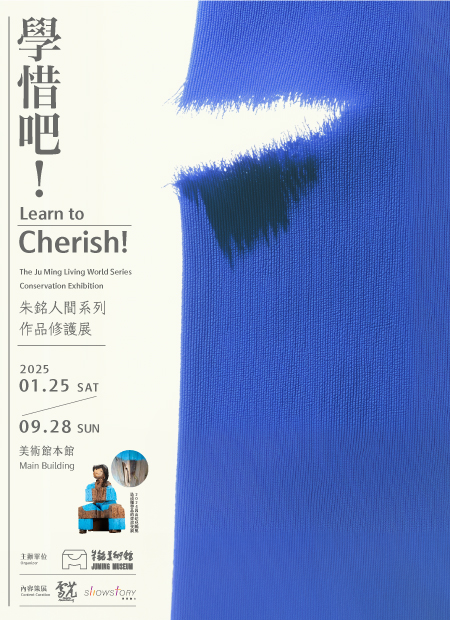
Learn to Cherish! The 2025 Ju Ming "Living World Series" Conservation Exhibition2025/1/25-2025/9/28
Main Building
In October 2024, Typhoon Krathon inflicted significant damage on the Juming Museum, severely impacting over 50 wooden sculptures from Ju Ming's renowned "Living World Series” In response, the museum has launched an exhibition titled "Learn to Cherish! Conservation and Renewal" to showcase the meticulous restoration process of these invaluable artworks. This exhibition offers a unique insight into the art conservation process, highlighting the techniques and narratives behind preserving cultural heritage. By focusing on the theme of "Conservation" the exhibition aims to foster a deeper appreciation for the preservation of art and everyday objects alike.
This exhibition offers a comprehensive and immersive exploration of fine art conservation through meticulously designed interactive displays. Visitors will engage with dynamic installations, observe live demonstrations of conservators at work, and participate in a hands-on experience area featuring carefully crafted wooden object mock-ups. This innovative approach seamlessly blends educational content with interactive entertainment, creating a family-friendly environment that allows guests of all ages to gain intimate insights into the intricate world of art conservation.
“Learn to Cherish! The 2025 Ju Ming "Living World Series" Conservation Exhibition" transcends the typical art exhibition. It serves as a platform for rediscovering cultural values and appreciating the nuances of everyday life. The exhibition encourages visitors to draw inspiration from the conservation of wooden sculptures and apply these principles of care and attention to their daily lives.
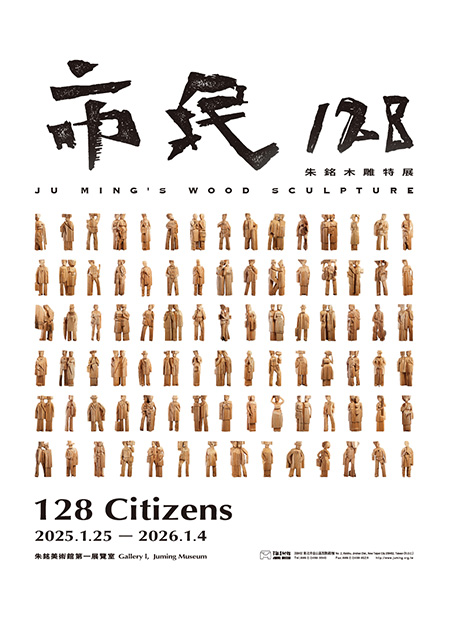
128 Citizens: Ju Ming's Wood Sculpture2025/1/25-2026/1/4
Gallery I
Sculptural art is not merely about conveying ideas through the artworks themselves. In contemporary sculpture, the focus has increasingly shifted to integrating physical space into the creative process, transforming the artwork into a “field” that carries concepts, emotions, and cultural phenomena. Consequently, the display of works has become an aesthetic challenge. Beyond the self-referential “field” created by individual pieces, the interrelationships between artworks, the dialogue between works and exhibition space, and the atmosphere created with audience interaction have all become a collectively constructed whole. Today, this “field” has become a crucial element in articulating artistic expression and meaning. Accordingly, with a focus on Ju Ming's 2012 Living World Series—Citizen, this exhibition presents a densely populated urban “field” through the artist's installation ethos of spatial abundance.
Living World Series—Citizen is a sculpture series comprising 89 sculptural pieces depicting 128 individuals, representing a response to the progression of social civilization. The figures' postures reflect the artist's profound observation and description of metropolitan life. This expansive collection of group sculptures is characterized by a “rapid cutting technique” using chainsaws. The carved markings intensify a persistently straight expressive force, utilizing the natural properties of Chinese Fir through techniques of splitting and tearing, revealing the inherent complex patterns of the wood. This distinctive expressiveness demonstrates the interplay and cross-referencing between speedy, repetitive industry processes and the natural physicality of wood.
The gossip women in the Living World Series draw from rural folk scenes, presenting characters with a primitive, rustic, and spontaneous quality, symbolizing the most innate human traits. In contrast, the Living World Series—Citizen, uncolored, in the wood's original hue simulates urban human conditions. The works are approximately life-sized, predominantly depicting front views of people. Vertically standing on the ground, they indicate a space constantly developing upwards, while their numerous figures suggest a collective, lateral expansion, hinting at the towering high-rises of urban landscape. These figurative representations also project the states of congregation and alienation within metropolitan civilization. Just as Ju Ming once stated, “Sculpture is not merely the creation of form, but a comprehension and expression of life.”
128 Citizens: Ju Ming's Wood Sculpture explores how the artist represents collective movements and individual lives within modern existence, contemplating the interdependence of humans and space. Through Ju's sculptural philosophy and the spatial qualities and arrangement specially designed for this exhibition, we aim to establish an interactive “field” demonstrating the connection between artworks, space, and audience. The exhibition invites viewers to traverse this unique spatial domain, immerse themselves in the constructed scenario, and intimately experience the thoughts and emotions conveyed. Ju offers a structure for comprehending the real world, a refined, human-centric perspective that reveals humanity as a microcosm within the march of urban progress. Ultimately, it proposes a deep exploration that while modern civilization continues to progress, humans eventually view nature as their belongings, creating a symbiotic relationship between civilization and nature.